The First Hours Of A New Video: What Early Views Actually Do
A question I get constantly from people building their first English-language channel: if nobody has watched my video yet, where does the platform get the information it needs to recommend it?
It is a fair question. A brand new upload genuinely does arrive with nothing attached to it. No history, no audience data, no idea who it is for. Something has to happen before recommendation can happen.
That gap is also the reason a whole industry exists selling “launch packages”, “initial engagement” and targeted view services to new creators. So this piece covers two things: what the platform is actually doing in those first hours, and why the services that promise to manipulate it are a bad trade – not a cautious one, a bad one.
What the platform is actually trying to learn
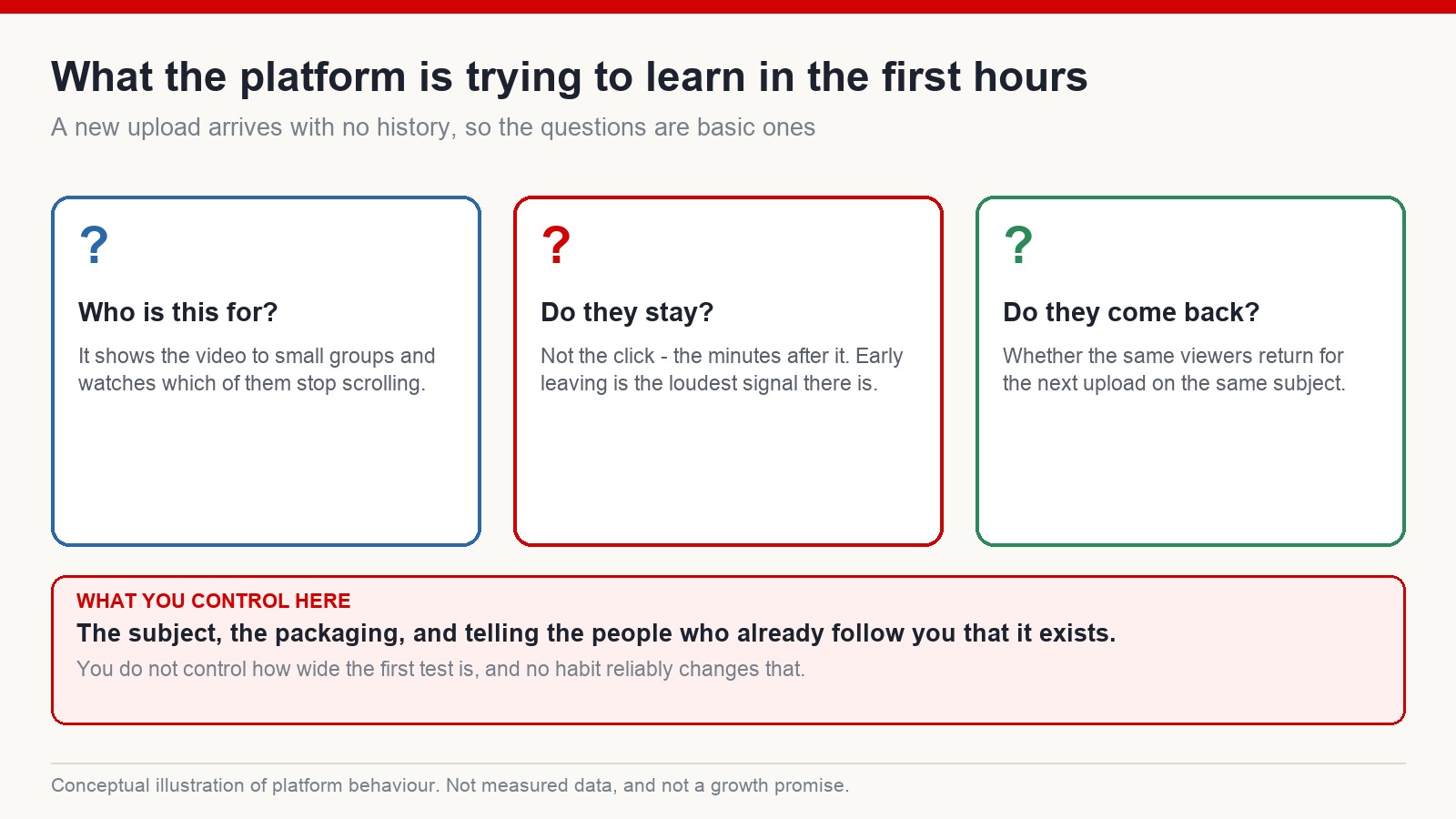
Strip away the folklore and the early distribution phase is straightforward. The system is trying to answer three basic questions, in order.
Who is this for? It shows the video to small groups – people whose viewing history suggests they might be interested, plus some of your own subscribers if you have any – and watches which of them stop scrolling.
Do they stay? This is the one that matters most and the one creators underweight. Not the click. The minutes after the click. People leaving in the first thirty seconds is the loudest negative signal available.
Do they come back? Whether the same viewers return for your next upload on the same subject. This is what separates a channel from a series of unrelated videos that happened to perform.
Distribution widens or does not widen based on the answers. That is essentially the whole mechanism, described honestly.
Why the early window gets so much attention
The first day matters because it is when the system has the least information and is therefore most willing to update its guess. A video that holds attention in its first small test groups gets shown to larger ones.
But two things get badly overstated in creator communities.
First, the window is not a cliff. Videos routinely start moving days, weeks or months after publication, particularly search-driven and evergreen material. A quiet first day is not a verdict.
Second, nothing you do at publication time reliably widens that first test. You do not control how many people the video is shown to initially. You control what happens when it is shown.
The pitch, and what it leaves out
Which brings us to the services. They are marketed with a plausible-sounding story: accounts aged to look natural, traffic routed through addresses in your target country, engagement patterned to resemble real behaviour, all designed to give the algorithm the “signal” it needs to understand who your video is for.
The story is coherent. That is what makes it persuasive. Here is what it leaves out.
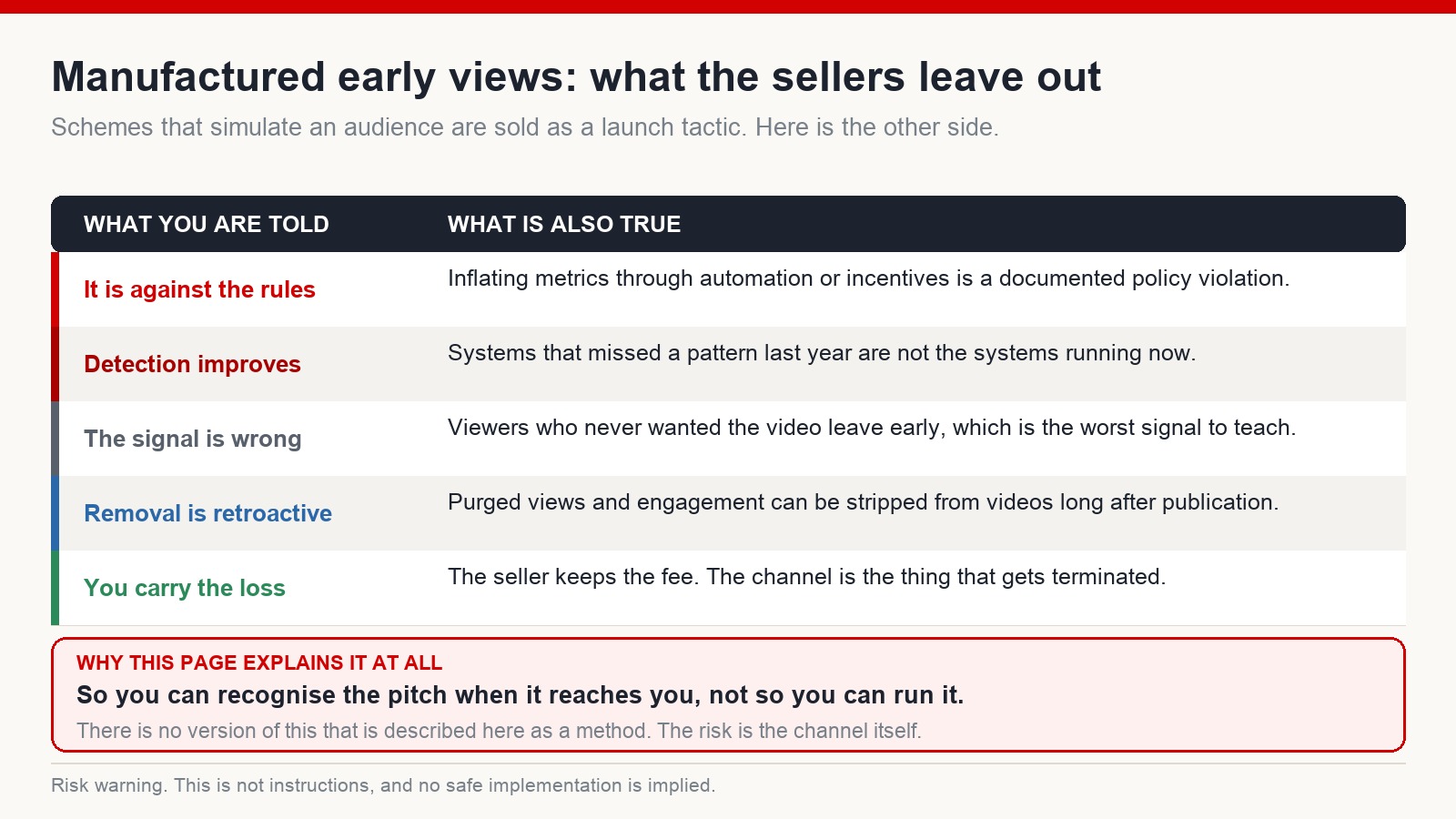
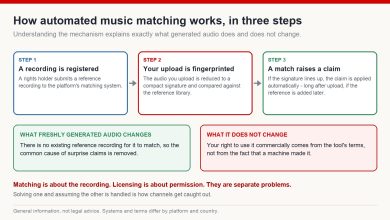
It is a documented policy violation. Not a grey area, not an unenforced technicality. Inflating metrics through automation, incentives or third-party services is explicitly prohibited, and enforcement ranges from stripping the metrics to removing the channel.
Detection is not static. Whatever pattern a service was using successfully eighteen months ago is being evaluated by different systems now. The seller’s evidence is always about the past.
The signal you are buying is the wrong signal. This is the part I find most persuasive as an argument, independent of the rules. Manufactured views come from viewers who never wanted the video. They leave early. You are spending money to teach the recommendation system that people do not stay for your content – the exact opposite of what you were trying to buy.
Removal is retroactive. Purged views and engagement can be stripped long after publication, taking any apparent momentum with them.
The loss is entirely yours. The seller has been paid. The channel is the asset at risk. If it goes, they are unaffected and unreachable.
I am describing this so you recognise the pitch when it arrives in your inbox or your comments, which it will. There is no version of it presented here as a method, and there is no configuration of it I would describe as safe.
What you can legitimately do at publication
The honest list is shorter and less exciting than the sales pages, but everything on it is yours to keep.
Tell the people who already follow you. A community post, an email list, a mention in a previous video’s end screen. These are real viewers choosing to watch. That is not manipulation, it is distribution.
Publish where your audience is awake. Not because a magic hour exists, but because a video published while your target region is asleep spends its first hours in front of nobody.
Get the packaging right before you publish, not after. The title and thumbnail determine whether the initial test converts at all. Fixing them three days later means the first test already happened without them.
Make the opening earn the next thirty seconds. Since early retention is the signal that decides everything downstream, that is where preparation actually pays.
Answer comments early. Genuine conversation on a new upload is a real behaviour, and the people leaving it are people who will likely watch the next one.
Nothing on that list guarantees anything. All of it is legitimate, and none of it can be taken away from you retroactively.
Targeting a country without buying anything
One legitimate concern underneath the seeding pitch is worth addressing directly: creators want their video shown to viewers in particular English-speaking markets, and worry the platform will misidentify who it is for.
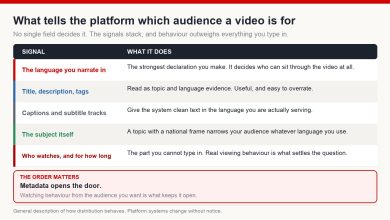
The influences you actually have are ordinary editorial ones. The language of the narration. The vocabulary, references and examples. What the thumbnail signals culturally. What the title matches in search. Whether the subject is one that particular audience searches for at all.
A video about a topic that market cares about, narrated in the language they speak, packaged in a way that reads as familiar to them, will find that audience if it finds any audience at all. The niche and the packaging do this work. Purchased traffic does not do it, and cannot substitute for it.
What decides whether a video grows
Once the first test happens, whatever produced it, the same four things take over: how often the thumbnail and title earn a click, how long people stay, whether they finish, and whether they were satisfied enough to come back.
If a video does not hold attention, no starting signal keeps it moving. The system stops widening distribution. This is the part that makes the entire seeding proposition self-defeating even before the policy question – it can, at best, get a bad video shown to more people who will leave.
Frequently asked questions
Do the first 24 hours decide a video’s performance?
They matter, but they are not final. Search-driven and evergreen videos frequently begin performing well after publication week. A quiet first day is normal, not a verdict.
Is buying views ever safe?
No. It violates platform policy, detection continues to improve, removal can be applied retroactively, and the resulting signal actively harms the video. There is no safe configuration.
Can I choose which country my video is shown in?
Not directly. You influence it through language, subject, packaging and what your existing audience looks like – not through settings and not through purchased traffic.
Should I share my video in groups and communities?
Sharing where it is genuinely relevant and welcome is fine. Mass-posting links into unrelated communities is spam, and it tends to produce viewers who leave immediately anyway.
What matters more than early views?
Whether people stay. Retention and satisfaction determine whether distribution widens; the initial view count on its own does not.
The uncomfortable conclusion
There is no tool more powerful than a video people want to watch to the end. That sounds like a platitude until you notice it is also a technical description of how the system works.
Every mechanism in the distribution chain is measuring some version of whether viewers stayed and whether they were satisfied. Anything that simulates those signals without producing them is measuring the same thing and getting a worse answer.
Spend the effort on the niche, the packaging and the first thirty seconds. That is where the leverage genuinely is.
If you want the full sequence for building an English-language faceless channel laid out in order, that is what mmoyoutube.com covers. Platform policies change and results vary widely between channels – treat everything here as reasoning to test, not as a promise.